About
1
The term memory can mean many things. It can refer to the patterns of neuron connections in the brain, or the processes in which information is encoded, stored, and retrieved, or our recollections of the past. Memory contains the life that has been lived, the events of the present, and perhaps even gives us foresight into the future.
I never grasped the necessity of memory until members of my family couldn’t remember anymore. Over the years, memory loss took root in both my father’s parents—known to everyone in the family simply as Papa ji (Respected Father) and Badi Mami (Elderly Mother) (Everyone in the Indian culture earns these types of honorific titles in their old age). After witnessing the effects of Alzheimer’s in Badi Mami and dementia in Papa ji, I was left with the distinct notion that anybody could fall victim to memory loss, and sooner than any of us expected.
While I was too young to fully comprehend my grandmother’s condition, I had come of age by the time my grandfather showed signs of dementia. As he started to confuse names and faces and forget details about his day, I realized that everything he represented—religious wisdom, family history, and especially a living connection to our mother country of India—could all be swept away from our ancestry. If I didn’t try to preserve some of his history, then I feared our entire Indian culture—the world he created every time he entered our home in the U.S.—would die with him. I needed to learn from him; I had to go in search of memory.
My journey to acquire my family’s history took place in the context of two worlds: the new, adopted country of America and the inherited homeland of India. As I spoke with relatives in both countries, I gathered stories of our collective past—our origins in what is now Pakistan, our growth in different cities across India, and the eventual migration to America. While these conversations certainly answered questions regarding origin, they only expanded inquiries related to the idea of home. As many first-generation Americans know, growing up in this country often requires one to straddle between two different worlds. While this dual experience has been personally rewarding, it has often left me hanging between uncompromising extremes.
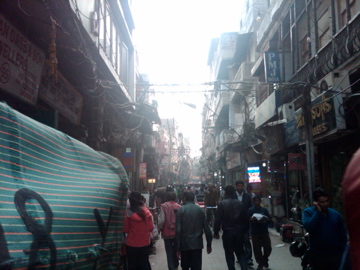 I have come to terms with the fact that neither country will ever become the dominant homeland, and why should it? Much of my life has and will occur in the uncharted waters of the In-between—a place built on memory, history, myth, creativity, and imagination. For the immigrant family, storytelling is considered close to sacred because it gives us the opportunity to preserve culture as well as create legacy in a foreign land. My quest for history led me to different forms of memory, including the spiritual anecdotes from Papa ji, the historical narratives from my father, and the religious mythology from my mother. These all combined to create a unique hybrid of non-fiction storytelling, and at the heart of all these accounts were individual and very personal memories.
As I recorded these memories, I recognized that this preservation was not only important to my family but for an entire generation of first-generation Americans. When I was younger, I used to think tradition only transpired in one direction. Your tradition was the set of principles and rituals that were bestowed upon you from the previous generation. But tradition was not only a handing-down process—this was only half of it. The other half required the younger generation to look back, to reach into the past and store within them everything that could be carried into the future. Without the preservation of memory, we would be exposed to the demise of any tradition, to the death of history, ritual, mythology, culture and the connection to the mother country. Without the physical homeland to remind us of our origins, we have more responsibility to protect the past. This is perhaps the only way of fostering a home away from the homeland and simultaneously building onto our nascent legacy in America.
The more memories I acquired, the more I wondered why some memories get preserved and others die out over time. What are the criteria for something to be remembered and stored inside our personal memory? Remembering is the easy part; it’s more challenging to understand why specific memories make more of an impression than others. Were these events more important? Yes—these are the milestones, the family members, the extreme experiences of comedy and tragedy—but not necessarily. There are some experiences that I remember simply because they happened to me. Think about your most enduring memories? Are they necessarily the most important to you?

What is the Memory Canon? While some argue that formal canons have no place in modern culture—exalting the tried and true without any concern for contemporary, diverse perspectives—they can still be found all around us, appearing in the form of school curricula, year-end lists, and top-10 rankings covering every different medium. Why are we obsessed with making lists? I imagine that it comes from the same desire to create time capsules as physical embodiments of our time on earth, as reminders to future generations of how things used to be. As our national attention span becomes increasingly short and our society tumbles along with constant upheaval and innovation, it becomes necessary for us to reflect upon the lessons of the past, on the things that once mattered.
My father, one of the great storytellers in my family, taught me that if we don’t learn from history then we gain nothing. The motive behind this blog is to learn something. I plan to use this space as a way to hold on to some memories, to preserve them in some way, and hopefully elucidate their meaning. As this blog progresses and stimulates conversation among participants, I imagine that an exploration of memory will eventually lead to insights into identity.
One of the main concerns of this blog is that as we age, do we have any control over what is remembered and what is forgotten? Does memory, or the absence of memory, occur first on a personal level or a collective one? If society forgets, is it all right for the individual to as well? I wish to explore the complexities of memory both on a personal level and a more social, collective one. How does something get placed in the Memory Canon and why?
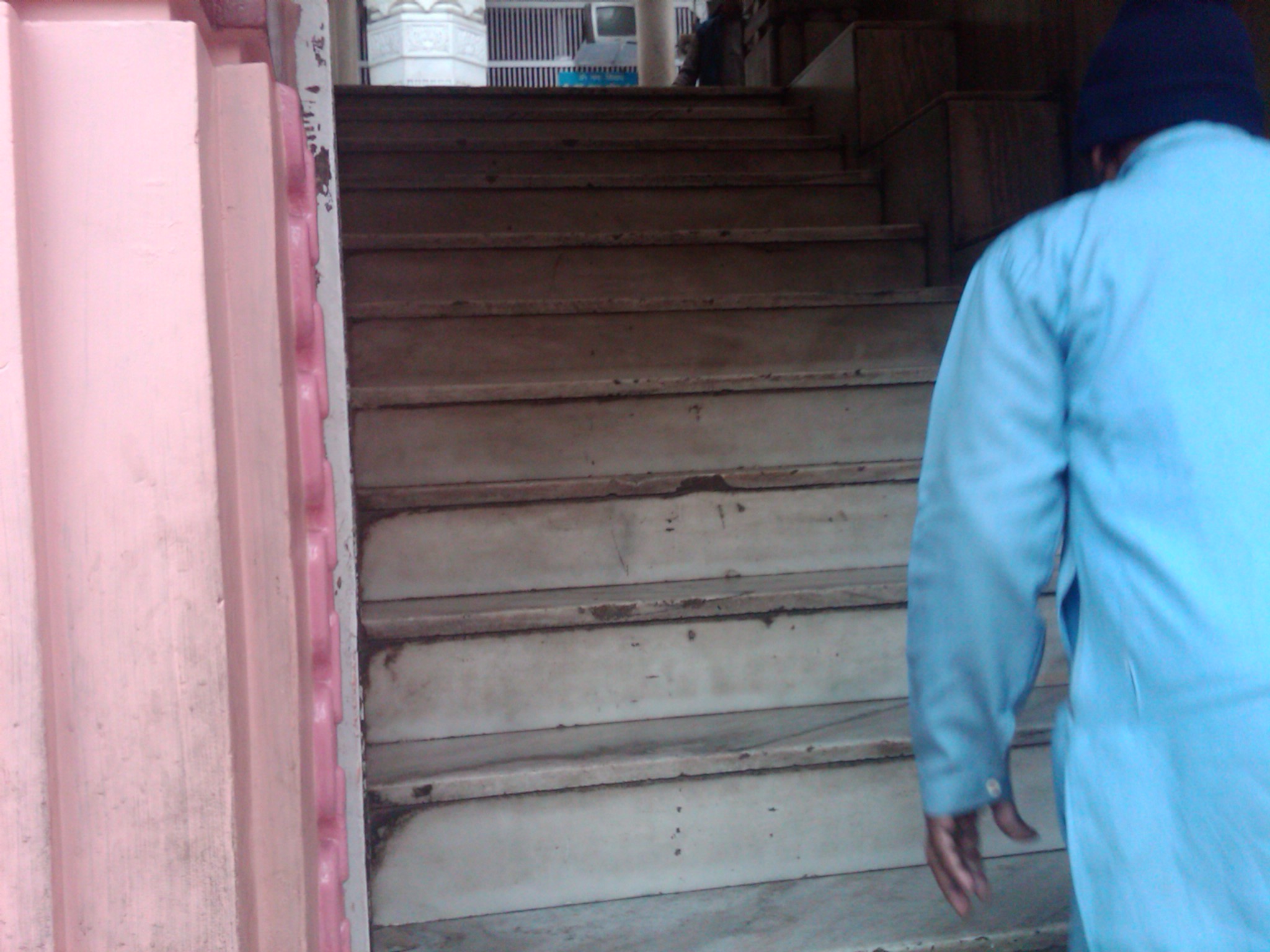 I plan to delve into the nature of memory—the scientific, metaphysical, and even mythical components—and realize its role in our present day culture. In doing so, I will cover new developments on Alzheimer’s Disease, scientific breakthroughs regarding the brain, memory’s role in storytelling and memoir, my own memories captured in personal essays and writing, and any mainstream news or artwork (books, film, television, etc.) that delve into this mysterious, ever-engrossing world. In addition, I will be approaching this terrain through my first-generation American perspective, one that must constantly reconcile two different halves of identity.
I look forward to the future and encourage your participation in this journey. I expect that many things will soon be added to the Memory Canon!
 The Memory Canon
Honorable quest. A journey I’d love to take myself to make new discoveries.